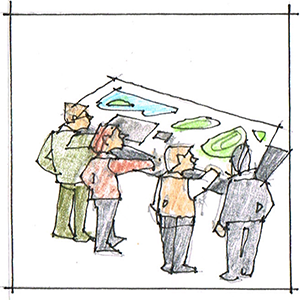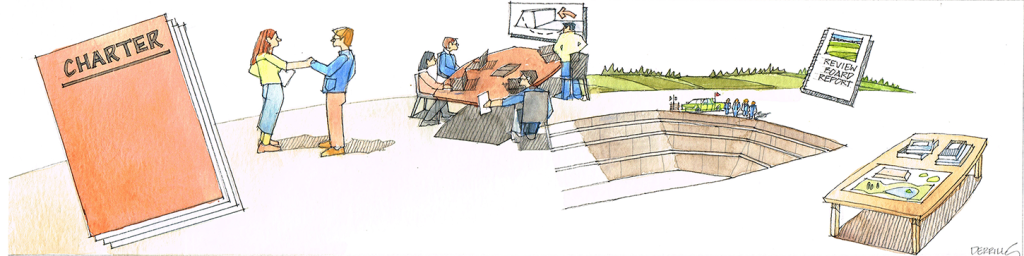
Modern review boards use a clearly defined mandate, which is sometimes referred to as the charter or terms of reference. Most charters are short, about three to seven pages. The charter sets out the purpose and responsibilities of the review board. It details the board’s level of review, its limitations, the process for meetings and agendas, the recommendations log, and community engagement. A clear charter and signoff process reduce the liability of board members. The charter is occasionally updated. Each time, the accountable executive at the mine and all board members sign the revised charter.
Most charters are similar, and the board members typically take the same approach to all their boards. Some charters are written for boards that oversee multiple mine operations. Some are written by head office to cover all their operations and then short appendices detail specifics for individual boards for each individual site.
It is useful to write a charter that needs little updating. For example, responsibilities are assigned to certain positions rather than named individuals, and the use of a common charter for all operations (as discussed above) supplies administrative efficiencies.
This page provides advice on forging a useful charter. Many mines take a minimalist approach, with just a couple pages of the bare basics of the Board’s scope. Others take a more maximalist approach and use the charter as a guide to roles and responsibilities of all those involved with the board and instructions on how the meetings will unfold. The sections below strike a balance between these goal posts.
A suggested outline for a charter is listed below. Grey boxes provided some sample text adapted from publicly available review board charters.
- Purpose of the review board
- Responsibilities of the board
- Responsibilities of the mine
- Limitations
- Level of review
- Lines of communication
- Board membership
- Meetings and agendas
- Confidentiality
- Consulting services contract
- Board member liability
- Recommendations log
- Community engagement
- Signoff on the charter
The first section of the charter sets out the purpose of the review board in a couple of paragraphs or with bullet points.
EXAMPLE:
Purpose of the review board
- Providing independent advice against corporate and international standards and the state of practice.
- Reviewing design process, monitoring, data analysis methods, and results.
- Providing nonbinding advice regarding design, classification, construction, operation, closure, and options analysis of structures.
- Providing an independent assessment to senior mine management, corporate representatives, and regulators, if applicable, on whether the mining facilities / landforms are designed, constructed, and operated appropriately, safely, and effectively.
- Providing the site team with practical guidance, perspective, experiences, and standard and best practices from other operations.
Note: The example texts have been copied, adapted, or paraphrased from charters filed with the government of British Columbia and are available in the Resources section of this website.
Responsibilities
The Board
The charter lists what the board is asked to do: meetings, field tours, readouts, community interactions, reports / deadlines, and letters to external groups. It includes a specific list of disciplines covered and a list of facilities to review, and which disciplines, activities, or facilities are excluded. Some charters have a map or table of statistics on each facility, which helps define the geographic limitations of the board’s review and provides clear spelling and capitalization of each facility and landform.

EXAMPLES:
Responsibilities of the board
The Board will:
- Provide technical support and recommendations, in an independent review capacity, on future projects regarding tailings and water management
- Perform reviews of designs, plans, and operations when specifically requested to do so by the Mine
- Provide review comments on design, construction, and operational activities that may have long-term stability or other critical performance implications
- Provide technical support, in an independent review capacity, to the Mine for design and implementation of corrective measures or other activities, if required
- Provide technical support and recommendations, in an independent review capacity, on future projects regarding tailings and water management.
List of facilities
Following is a list of tailings facilities in the Board’s scope
- North Dam and Spillway
- South Dam and Diversion Channel
- East Dyke (including Seepage Ponds 1 and 2)
Following is a list of mine rock stockpiles in the Board’s scope
- Mine Rock Stockpile #1
- Mine Rock Stockpile #2
The dams, reservoirs, and surface water drainage systems are specifically excluded from the Board’s scope.
Figure 1 provides a map with the facilities outlined. Table 1 provides details regarding the facilities for reference.
The disciplines covered are based largely on the needs of the particular site. More common disciplines covered by review boards include:
- geotechnical (pit walls, dams, heap leaches, and mine rock stockpiles)
- tailings management
- hydrogeology (seepage and groundwater)
- geochemistry
- surface water management and water quality
- reclamation, landform design, closure planning
- earthworks construction.
Less common but often valuable disciplines include Indigenous knowledge; tailings and mine planning; mine permitting and development; water treatment; cover system design, reclamation and revegetation; toxicity, human health and ecological risk assessment; social aspects and community collaboration; regulatory; and R&D and technology development.
The level of review is often spelled to ensure readers understand that the board relies on the information selected by the presenter and is relying on their observations.
The charter often includes deadlines for the board’s draft and final reports. Tight deadlines for the draft are useful (1 to 2 weeks) but most charters indicate 4 weeks.
Charters often list specific documents that board members are expected to use to help them fulfill their duties. The external standards are typically well known to the members and already part of their standard of care. Other documents may include corporate standards and local publications.
EXAMPLE:
Applicable standards
Provide an independent opinion to the Mine as to whether its tailings storage facilities (TDFs) meet the dam safety requirements of the following technical guidelines:
- Applicable International Congress on Large Dams (ICOLD) Guidelines on Tailings and Water Dams.The Corporate standards for tailings management as listed in Appendix A.
- Canadian Dam Association (CDA) Guidelines and Technical Bulletins
- BC Dam Safety Regulations
- Health, Safety and Reclamation Code for Mines in British Columbia (dam safety related aspects)
- Mining Association of Canada (MAC) Tailings Management Guidelines
The mine
This section is often just a few paragraphs detailing the roles and responsibilities of mine staff and management in the execution of board activities and meetings. Some mines expand on this section to provide a checklist or guidance for each position to facilitate meetings.
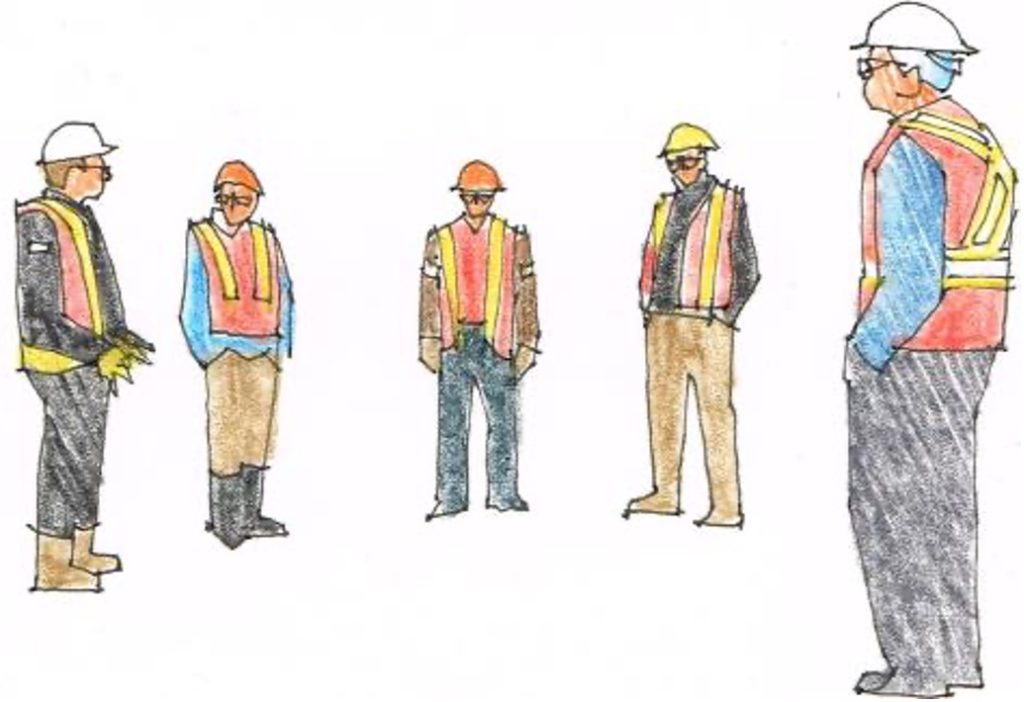
There are responsibilities assigned ot the accountable executive (AE / owner); mine manager, operations manager; principle engineer / RTFE; board secretariat (usually an intermediate or senior technical person); and the engineer of record (EOR).
EXAMPLE:
Responsibilities of the mine
The ITRB will report to the Mine Manager who will be the liaison between the board members and senior management. The RTFE will coordinate the review meetings, distribute the agendas and meeting minutes, and attend review meetings. The EOR will attend review meetings, work with the RTFE to prepare the background information for the preliminary sessions, and be available as needed to provide technical information related to the facilities.
Limitations and Liability
This section acknowledges that the board acts exclusively in an advisory capacity and assumes no responsibility for the site nor directs the engineer of record or the mine. It may highlight that board members are not auditors and are only responsible for material presented (an agenda is appended to the board report for this reason).
Forensic investigations often illustrate the limitation of the independent review process. While an independent review can help reduce risks, it is not infallible. Indeed, some sites have experienced catastrophic dam failures despite the efforts of active independent review boards.
EXAMPLE:
Limitations
The role of the Board is advisory only.
The responsibility for the design of the TMF remains with the Designer of Record (DoR) / Engineer of Record (EoR) and the responsibility for operation, maintenance and performance of the TMF and water management structures remains with the mine operator.
The Board cannot direct the DoR/EoR nor the mine operator.
This section also typically attempts to limit board member liability. The ratio of liability to reward for board members is typically high. The board has no control over the mine. Board members should be shielded from liability from both the mine and third parties.
Board member liability, particularly in the wake of recent dam failures, can be top of mind for potential members, and liability insurance for geotechnical sole practitioners is not always feasible. A common trend is for the mining company to explicitly indemnify each board member — the board is careful to provide only advice and not direction (as indicated in the charter and typically in every report). In return, there is often a statement to the following effect: “the owner shall indemnify, defend, and hold the consultant harmless against and from any and all third-party claims and losses.”
There is a need for development of an industry-wide indemnification for review board members. Such indemnification should include a clause that indicates the mine will defend review board members from third party lawsuits and should avoid exclusions of liability for items such as gross negligence (some review board members continue their costly liability insurance coverage so that they can defend themselves against the client’s insurance company bringing such charges in the event of a failure).
EXAMPLE:
Indemnification
The Mine will indemnify the ITRB members from professional liability for incidents, accidents or unfavorable results in the performance of the TSF because of the ITRB member’s advice, opinions or lack thereof because of this independent review process. The indemnity will not cover incidents of gross negligence, willful misconduct or fraud.
Overall responsibility for the performance of the TSF remains with the Vice President Operations and professional responsibility for the TSF design remains with the Engineer of Record.
Communications
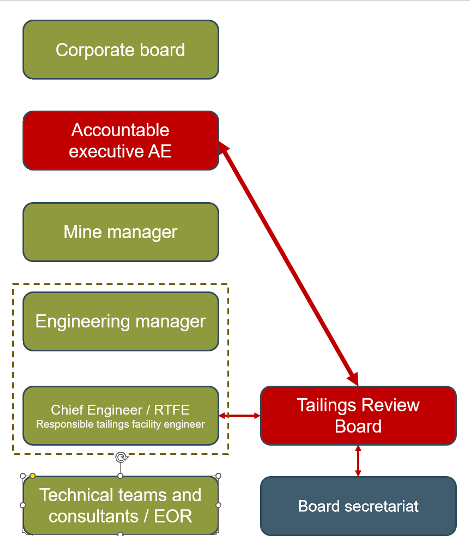
An organizational chart is used to describe the formal lines of communication, the main one being that the board reports, and provides unfiltered communication, to the accountable executive (or a member of senior management responsible for the facilities being reviewed). It also identifies the main contact for the board in terms of logistics.
EXAMPLE:
Lines of communication
The Board will report to the Accountable Executive for tailings.
The Board will coordinate their activities with a designated representative of the RTFE (the Board Secretariate) who will also assist with arrangements and logistics.
Composition
The composition of any board will change over time to reflect the needs and issue of the mine. This section of the charter may indicate the number of members and their level of required qualifications and experience. It will note that the members should not have conflicts of interest and what to do should one arise. It may describe the process for appointing and on-boarding new members and specify term lengths. Some mines go to great length to describe the processes, others just have a sentence or two.
EXAMPLE:
Board membership
The Board will consist of two to four independent technical consultants with applicable expertise as determined by the Corporate Tailings Team.
One board member will be chosen with and represent the ABC First Nation under the existing MOU.
No Board member shall have been the EoR, at any point, for any facility being reviewed, nor should they be currently employed by the mine or any organization that is an EoR for any facility being reviewed.
At the request of the Board, or the Mine, additional salient experts may be asked to participate in or observe a review meeting. These experts are to provide input/advice on areas outside the expertise of the Board members but critical to operation of the facilities.
The membership of the Board may be modified from time to time, at the discretion of the Accountable Executive.
Confidentiality
A confidentiality statement will allow mine management to share all information and ideas freely with the board. Participants are often alert to any cases where the free flow of information is impaired. Board members also include confidentiality clauses in their contracts with the mine, and similar provisions are common in professional associations. There may be times when a duty to report to the regulator or the professional association becomes necessary, but this is extremely rare.
In theory, this section can get a bit more complicated when a board member represents a local community, although such scenarios are usually easy to manage.
Some mines go to extreme and unnecessary lengths by marking “CONFIDENTIAL” on every presentation slide, which can perhaps be counterproductive and reduce trust.
EXAMPLE:
Confidentiality
Confidential, non-public, or other information considered material to the company that may be discussed in meetings to provide context to technical discussions shall not be disclosed to external parties in any reporting or conversations without written consent from the Company unless required by law.
Consulting services
The charter indicates that each member of the review board will have a separate contract. As with most such contracts, individual contracts contain the term, the list of services, compensation, ownership of records, confidentiality, and commercial terms.
The hourly rate is typically set by the review board member and agreed to with the mine, and adjusted at the beginning of each new contract (typically every year or two). Some companies pay all board members the same hourly rate. Board members prefer to invoice the mine directly rather than through third-party websites or as a subcontractor for an engineering firm. Most often, the costs are paid by head office, rather than mine operations.
Board member liability can be an issue in boilerplate contracting. Routinely, the mine manager or vice president needs to intervene. Contract payments can be like a payday to some consultants. Board members should invoice promptly; secretariates should take extra care to make sure invoice payments come in a timely manner.
EXAMPLE:
Contracting
The members of the Board shall be under contract to the DEF Mine JV. The Operations Manager or designate shall manage resources and provide support to the ITRB, with costs to be borne by the JV; the ITRB shall not be responsible for any budgetary contribution to the convening, reporting or presentation as applicable to their work.
Documentation
The mine tracks the board’s recommendations with a spreadsheet or database and reports periodically on progress. Each mine does this a little differently. The board expects that its recommendations will be addressed in a timely manner. Recommendations are reviewed at the start of each meeting or annually. Recently regulators have become interested in whether any board recommendations are not being addressed.
EXAMPLE:

This section in the charter indicates that a recommendations log will be kept, the expectations for addressing issues, and how often the log will be reviewed with the Board.
EXAMPLE:
Recommendations log
The Mine will report on follow-up Board recommendations at the review meeting.
At the subsequent Board meeting, the Mine will present to the Board information gained or actions taken, if any, to address recommendations in the Board’s final report.
The Board will consider the information presented regarding each recommendations and will, in writing, either certify that ABC Mine has appropriately resolved the recommendations or leave the issue open.
Signoff
The charter is dated and signed off by the accountable executive and each board member. A record of charter updates should be included. Whenever the charter is updated, it can be useful to append it to the next board report.
EXAMPLE:
Signoff
The members of the Board shall be under contract to the DEF Mine JV. The Operations Manager or designate shall manage resources.
The Terms of Reference shall be reviewed annually, but may be requested to be reviewed by the group or individuals at any time.
____signed___________
Edie Foxtrot, PhD PEng
____signed___________
Gupreet Hotel, PGeo
Community engagement
Some review boards are involved with the mine’s community engagement. Any such activity should be spelled out in the board’s charter. A memorandum of understanding may exist between the community and the mine. In some cases, one board member will act as the liaison with the community. After each board meeting, that member will meet virtually or in-person with the community representative. The board member is also available between meetings. Records of these communications are provided to the mine.
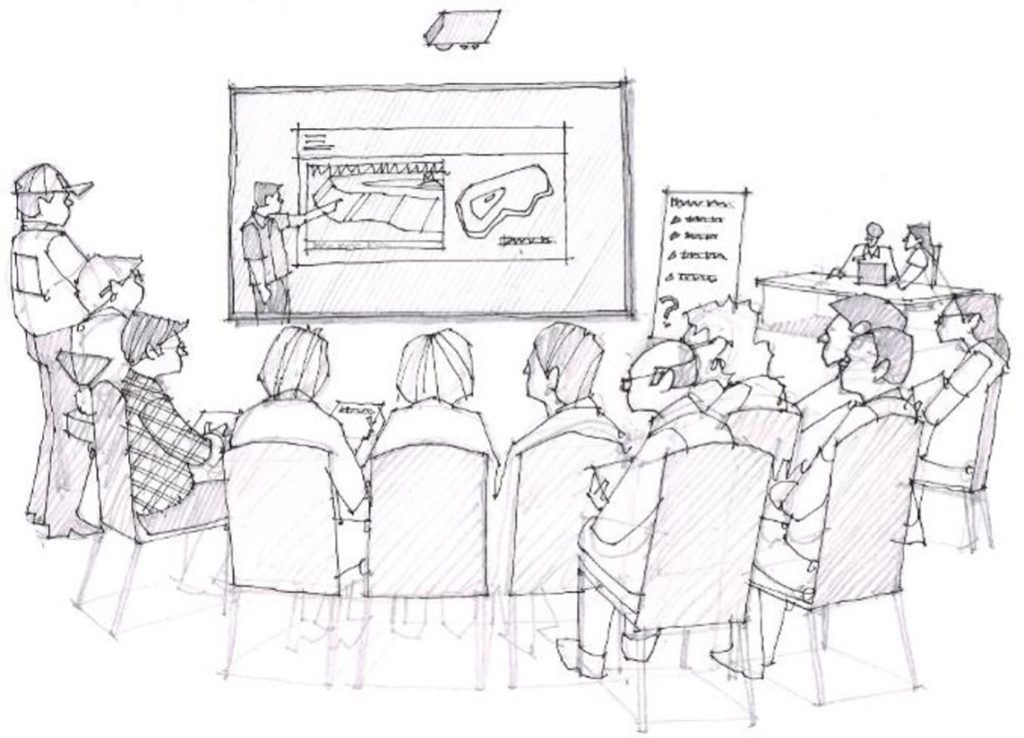
Typically, such engagement involves a few hours per year for the board member. Often, much of the community interest extends beyond dam safety, and relates to details regarding existing or future water quality or business / contracting opportunities. It can extend to opportunities for reclaimed land uses by the community. These issues may not be within the board’s charter. Community interest is a rapidly evolving challenge for the mining industry, and review board interaction with communities will likely increase.
EXAMPLE:
Community engagement
Board members will support by the mine and acceptable to the regulator (position) and the local community (position).
A representative of the ABC Nation may attend working group meetings on as required basis.
At the end of each meeting, the Board will provide a separate readout to invited local communities. The slide deck used shall be the same as that presented to Mine management.
The Board’s findings will be summarized in a letter to local communities and approved by a member of the Board before it is sent out.